
By Patricia Nanteza
Kenya is having an important conversation about its energy future. Nuclear energy is one of the options on the table. Some support it. Others oppose it, and that is okay. Democracies thrive when citizens question, debate and hold different opinions.
What should concern us, however, is when stakeholder engagement becomes the enemy.
This week, WePlanet Africa (Kenya Chapter) and other organizations supporting nuclear energy were in Siaya to engage communities and share information about the technology. Information available to us indicates that our teams are being portrayed as enemies rather than facilitators of dialogue. Public meetings have been labeled propaganda. Community outreach has been dismissed before conversations even begin. We have been accused of hidden agendas, while calls to resist or “not allow” engagement have become increasingly evident.
This should concern everyone, regardless of where they stand on nuclear energy.
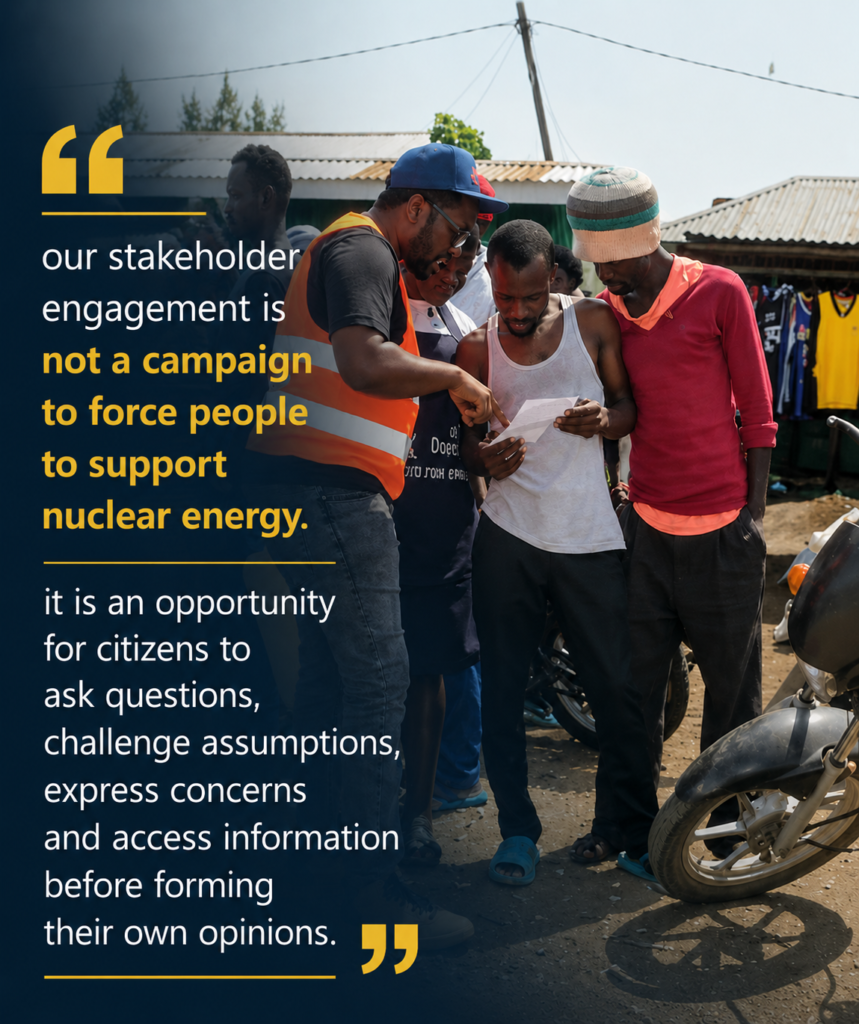
Our stakeholder engagement is not a campaign to force people to support nuclear energy. It is an opportunity for citizens to ask questions, challenge assumptions, express concerns and access information before forming their own opinions. It is a cornerstone of democratic participation.
At Jaramogi Oginga Odinga University of Science and Technology (JOOUST), we had planned a two-hour engagement with students. Instead, the discussion lasted almost four hours because of the depth of the questions – many of them focused on nuclear energy safety. The students challenged us. They questioned us. And we welcomed every question.
We also travelled through Siaya with a mobile information caravan, inviting residents in markets and along the lakeshore to come, listen, ask questions, and engage. Our team spent an entire day answering questions – not demanding agreement but encouraging informed dialogue.
The people of Siaya are not passive recipients of information. They are thoughtful citizens capable of listening to different perspectives, asking difficult questions and making informed decisions. Suggesting that communities should be shielded from information because someone has already decided what they should believe underestimates both their intelligence and their agency.
Every Kenyan has the right to hear from supporters, critics, scientists, regulators, civil society organizations, and local leaders alike. No single group should claim ownership of the conversation or decide whose voice deserves to be heard.
Disagreement is legitimate. Attempts to silence engagement are not.
Kenya’s Constitution guarantees access to information and meaningful public participation. These principles cannot exist if one side seeks to prevent conversations from taking place. Citizens cannot make informed decisions if they are discouraged from listening.
The writer is the Africa Coordinator for WePlanet.