

By Peter Gichuki
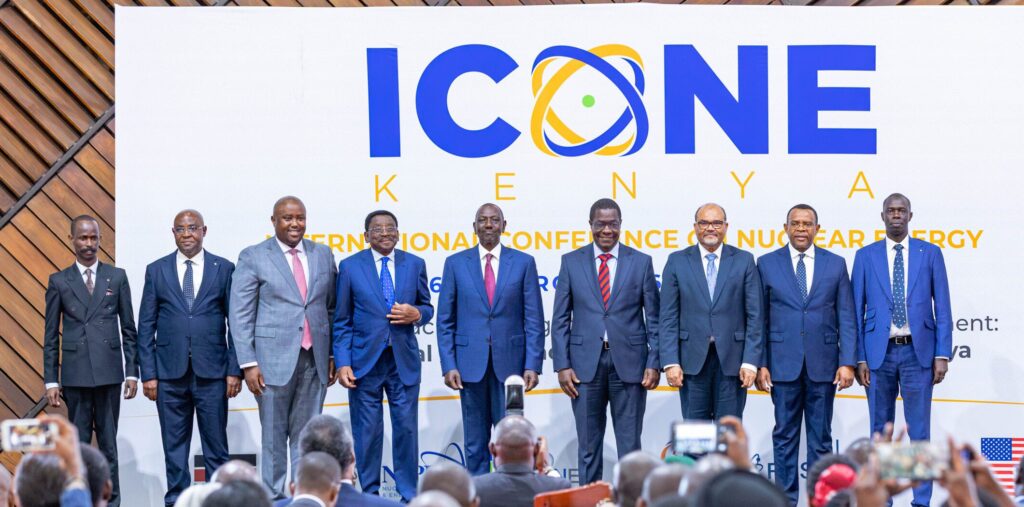
Nairobi-Kenya The International Conference on Nuclear Energy (ICONE) at the KICC in Nairobi brought together experts to discuss technical plans for Africa’s sustainable development. The momentum for these plans was solidified by President William Ruto, who confirmed his support for the nuclear energy project during the summit. He noted that Kenya intends to increase its power production by 10,000 MW, with 30% of that total expected to come from nuclear energy.
But as the discussion ends, I keep thinking of a conversation I had in Siaya County, the proposed host community of Kenya’s nuclear power plant. Energy access is a daily struggle for families in Siaya with residents reporting constant blackouts. For a student, electricity means time to study. For a fisherman on Lake Victoria, it determines whether a day’s catch is preserved or lost. Reliable power is essential.
Nuclear energy may offer part of the solution, but many Kenyans still associate it with disasters like Chernobyl. Others question why the country should invest in nuclear energy when it has strong geothermal resources in places like the Olkaria Geothermal Field. These concerns are valid and must be addressed openly.
If Kenya is to pursue nuclear energy, success will depend on trust that begins with the communities. Engagement cannot remain in Nairobi hotels, it must move to village barazas, churches, and beaches. People are more likely to listen to trusted local voices such as chiefs, teachers, and Beach Management Unit leaders, speaking in familiar languages.
Communities will expect real benefits. Technical jobs will require long-term training, but institutions like the Jaramogi Oginga Odinga University of Science and Technology can be strengthened to prepare local youth to take them up. At the same time, visible improvements like roads, hospitals, and infrastructure, must come earlier.
Respecting local traditions is essential during land acquisition, for instance, Luo culture places immense spiritual value on ancestral graves. Therefore, developers must create frameworks that allow for culturally sensitive relocation of remains. Fair compensation includes a thorough understanding of these spiritual and community connections to the land.
ICONE 2026 was a great start for international partners, but the real work will happen in the rural areas where the plants will actually sit.
We can build a nuclear program on paper, or we can build one on the solid ground of community trust. Let’s choose to listen first.